
Region locking is the complaint that outlasts every other complaint in anime fandom. A series is on Crunchyroll in one country, on Netflix in another, on nothing at all in a third, and the one you want is the third. It looks like a platform being awkward. It is almost never the platform.
The reason sits in how anime is financed and sold, and once you can see that structure the pattern of what is available where stops looking random. This article explains the mechanics and then the legal position on working around them. It is general information rather than legal advice.
Nobody sells anime worldwide by default
An anime series is usually owned not by its studio but by a production committee, a joint venture of companies that each put money in and each take rights out. The manga publisher, a broadcaster, a music label, a toy company and a home video label might all sit on the same committee, and the rights they hold are divided by medium and by territory rather than pooled.
That matters because there is no single party who can say yes to a global deal. International rights are sold territory by territory and window by window. A simulcast streaming licence for North America is a separate transaction from a subscription streaming licence for Latin America, which is separate again from a home video licence for Germany. Each one has its own buyer, its own price and its own term.
The territories are far more granular than fans expect. Latin America is frequently split so that Brazil goes to one buyer and Spanish speaking markets to another. Southeast Asia might mean Thailand and Vietnam in one deal and the Philippines in a different one. Australia and New Zealand are often bundled with neither Europe nor Asia. When a show appears in four countries and not the fifth next door, that is usually because nobody bought the fifth.
Anime is not withheld from your country. It is sold to your country, or it is not sold to your country, and the committee that owns it is made of several companies that each control a different slice. For more on that structure see who actually owns an anime.
Windows explain the timing, not just the geography
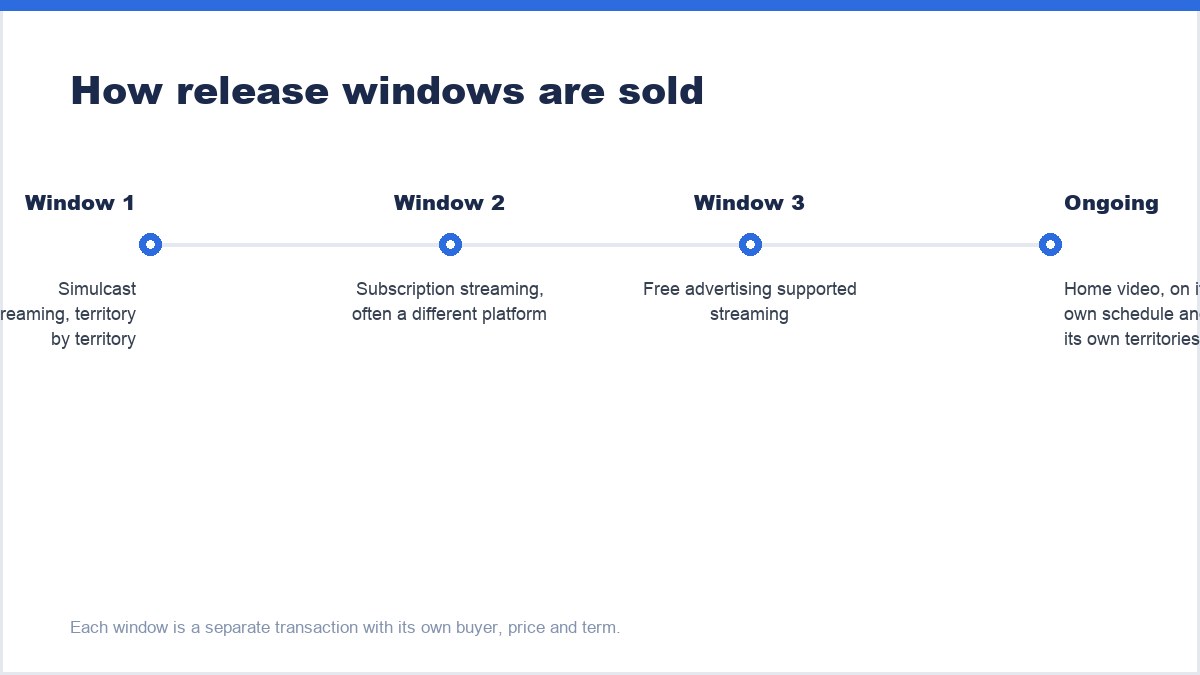
Rights are also sold in sequence. The simulcast window comes first and is where most of the attention is. A subscription streaming window often follows, sometimes with a different platform entirely. A free, advertising supported window can come later still, and home video sits across the whole thing on its own schedule.
This is why a series can vanish from one service and reappear on another a year later. The licence expired. It is also why catalogues shrink without warning. Nobody removed the show out of spite. The term ran out and either nobody renewed or someone else outbid.
Music is the quiet reason some episodes are missing
Opening themes, ending themes and insert songs are frequently licensed separately from the episode they appear in, and often by a music company that sits on the committee for exactly that purpose. Those music rights can be cleared for Japan and not for anywhere else.
The results are familiar to anyone who watches older series on a streaming service. An opening replaced with instrumental filler. An episode that exists everywhere except one platform. A home video release missing the song that was on the broadcast. In each case the video rights cleared and the music rights did not.

Physical discs are region locked too, by a different mechanism
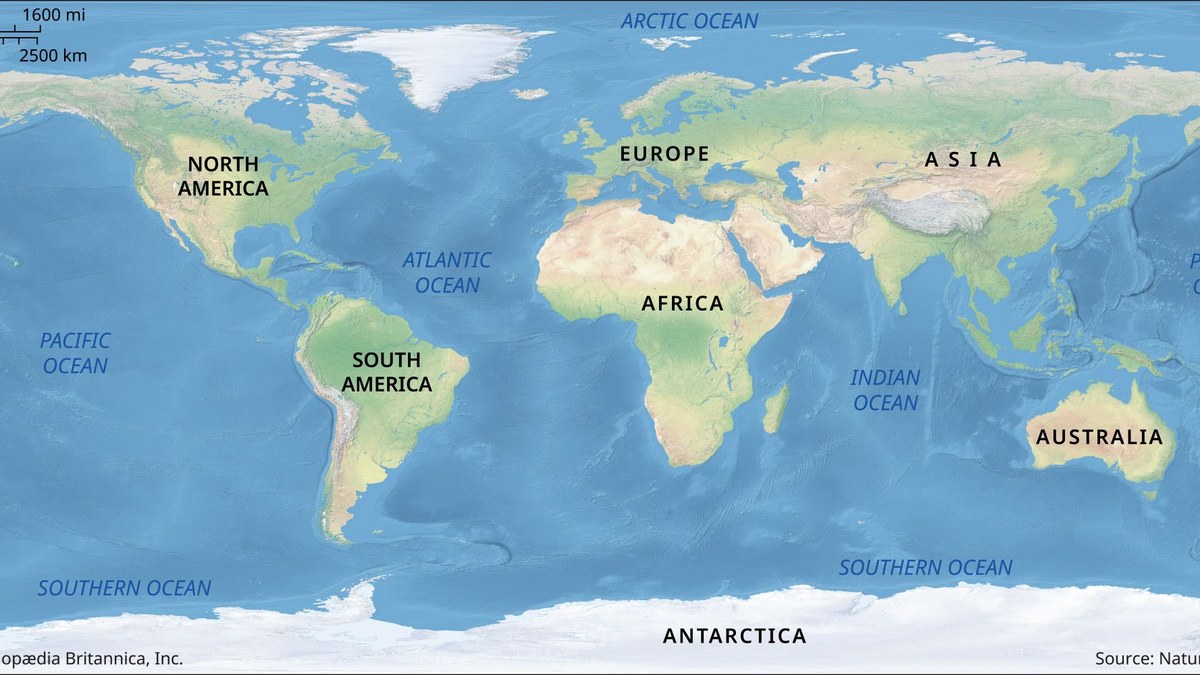
Blu-ray uses three regions. Region A covers Japan, North and South America, Korea, Taiwan and much of Southeast Asia. Region B covers Europe, Africa, Australia and New Zealand. Region C covers most of the rest of Asia including China and India.
Japan and North America sharing Region A is the quirk worth knowing. It means American discs play on Japanese players and the reverse, which historically made Japanese publishers nervous about cheap overseas editions flowing back into their home market, where anime discs are priced several times higher. DVD drew its lines differently again, putting Japan in the same region as Europe.
Is using a VPN to get around it illegal?
In most countries, using a VPN is lawful and so is connecting through one to a streaming service. There is generally no specific law making the circumvention of a geographic block a criminal act, and a VPN is an ordinary privacy and security tool with countless legitimate uses. Some countries do restrict or licence VPN use directly, and in those places the answer is different, so this depends on where you are.
What a VPN does reliably breach is the contract you agreed to. Crunchyroll, Netflix and effectively every other service require you to access the service from a territory where it is licensed, and misrepresenting your location is a terms of service violation. The realistic consequence is not prosecution. It is the service detecting the VPN and blocking it, or suspending the account.
There is a legal distinction worth keeping clear. Paying for a subscription and watching licensed content through a VPN is a contract problem between you and the platform. Watching the same show on a pirate site is a copyright problem involving the rights holder, which is covered in our piece on anime piracy law. People often treat those as the same act. They are not.
The European Union carved out one genuine exception. Under the portability regulation that has applied since 2018, a subscriber to an online content service in one member state is entitled to access that service while temporarily in another member state. It is narrow, it covers temporary presence rather than permanently living elsewhere, and it only works inside the EU, but it is the one place where the law overrides the geographic block rather than merely tolerating people routing around it.
Why this is slowly improving
Global simulcasting barely existed fifteen years ago, and the licensing machinery that produces region locks was built for a world of territorial television deals. Two things are eroding it. Streaming buyers increasingly want multi territory or worldwide rights in a single transaction, and committees have learned that fragmenting a release feeds piracy in whatever market got left out.
Netflix and Disney now occasionally take worldwide rights outright, which is why their anime originals appear everywhere at once. Crunchyroll’s reach has widened considerably. The gaps that remain are concentrated in older catalogue titles, where the original contracts were written territory by territory and nobody wants to pay to renegotiate rights for a show from 2004.
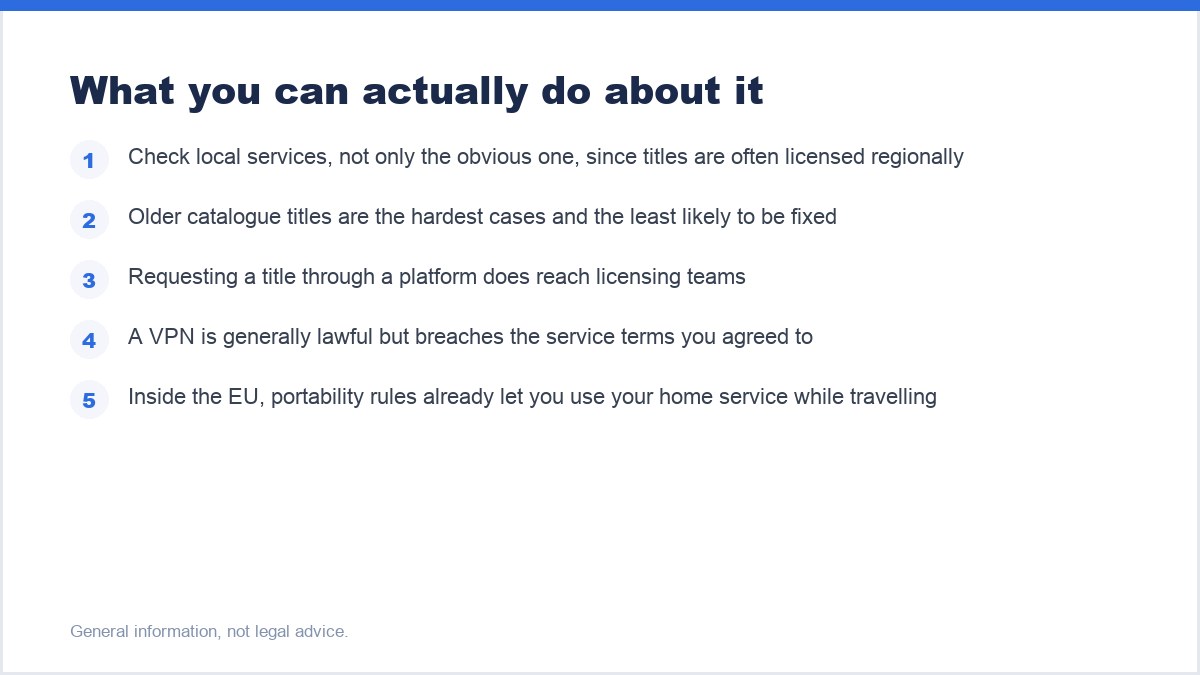
- Check more than one service. A title missing from the obvious platform is often licensed to a local one.
- Older series are the hardest cases and the least likely to be fixed.
- Requesting a title through a platform’s own channel does reach licensing teams, and demand signals are part of how windows get bought.
- If you travel inside the EU, portability rights already cover you.